
We live in an era where technology doesn’t just mediate our relationships—it actively designs them. For the 18-35 audience, this reality is more evident than ever. Consider the dating app experience: it starts with a few basic filters, but quickly evolves into an hyper-personalized relationships machine. The algorithm learns your preferences, analyzes your swiping patterns, and even tracks how long you gaze at a profile photo to deliver what it predicts is your “perfect match.” This isn’t just about finding love; it’s about optimizing human connection.
But what happens when we outsource the most intimate parts of our lives to code? We’ve become accustomed to highly tailored recommendations in every other part of our lives, from streaming services suggesting a movie to e-commerce sites knowing when we need new running shoes. It’s natural that this personalization trend has extended to our social and romantic lives. Yet, this high-tech approach comes with a psychological cost. While technology promises efficiency and reduced uncertainty, it can also create relationship filter bubbles, increase performance anxiety, and blur the line between authentic connection and curated performance.
This article explores the future of hyper-personalized relationships for Millennials and Gen Z. We’ll examine how AI is reshaping dating and social dynamics, analyze the complex psychological effects of algorithmic connection, and, most importantly, provide actionable strategies for finding a healthy balance between technological convenience and genuine human connection.
The Algorithmic Shift: How AI Redefined Relationship Formation
The idea of using data to find a partner is not new. Matchmaking services have been around for centuries, and online dating platforms like eHarmony revolutionized the process in the early 2000s by using extensive questionnaires to create compatibility scores. However, the introduction of hyper-personalized relationships marks a fundamental shift from human-driven matching to AI-driven optimization.
For a new generation, dating apps are no longer just a digital address book; they are highly sophisticated recommendation engines that learn in real-time. These apps analyze not only what you say you want, but also what your behavior suggests you actually want. This process involves machine learning algorithms that track subtle patterns: who you swipe right on, who you message first, how long you take to respond, and even the types of conversations that lead to exchanging numbers. This data is then used to refine the matching process, ensuring a more efficient user experience.
The core of this algorithmic shift lies in its predictive power. Instead of passively waiting for a match based on static preferences, users are now presented with prospects that are dynamically generated based on a vast dataset of user interactions. This approach, often called algorithmic dating, promises to remove the “wasted time” associated with traditional courtship. The promise is simple: eliminate incompatibility early by identifying potential issues before you even meet. This efficiency resonates strongly with a generation juggling careers, social lives, and personal goals, making the hyper-personalized approach highly appealing.
However, this reliance on AI for relationship optimization has led to a new set of dynamics. For example, some platforms use AI to help users craft better messages, with tools suggesting responses that are “charming” or rephrasing potentially offensive or “red-flag” comments. While intended to improve communication, this feature raises questions about authenticity versus convenience and makes it harder to assess a potential partner’s true self.
Beyond Romantic Relationships: The Rise of AI Companionship
The concept of hyper-personalization extends beyond traditional dating apps and into the realm of AI companionship. As technology advances, we are seeing the emergence of highly sophisticated chatbots and virtual assistants designed to simulate romantic partners or friends. These AI companions offer consistent emotional support, are available 24/7, and provide a non-judgmental space for users to express themselves. This provides significant appeal to individuals struggling with loneliness or social anxiety.
For some, these AI companions serve as a “practice ground” for social interactions, helping individuals develop skills and confidence that can transfer to human relationships. For others, however, the experience offers such a high degree of personalization and convenience—lacking emotional baggage, unpredictability, and mutual effort—that it can distort expectations for real-life relationships. Research suggests that engaging with AI companions can make it harder to build or repair human connections by creating unrealistic expectations about real-world partners.
The Paradox of Personalized Connection: Efficiency vs. Serendipity
When we evaluate hyper-personalized relationships, we find ourselves in a space defined by a complex trade-off between efficiency and genuine human experience.
The Promise of Precision Matching and Reduced Risk
The primary benefit of hyper-personalization is efficiency. By analyzing large datasets, algorithms can help individuals connect with partners who share specific values, interests, and goals. This data-driven approach aims to increase the likelihood of compatibility and reduce the time spent on mismatched dates. The result is a more intentional and less random dating experience, saving valuable time for busy young professionals. In a fast-paced world, the idea of quickly navigating past superficial connections to find someone truly compatible is highly attractive.
The Dangers of the “Filter Bubble”
However, this efficiency comes at a high cost: the creation of a relationship filter bubble. Just like social media algorithms show you content that reinforces your existing beliefs, dating algorithms prioritize partners similar to those you’ve previously liked or interacted with. This “homophily” principle—the tendency to associate with people similar to oneself—is amplified by AI. While this sounds good in theory, it actually limits exposure to diverse viewpoints and personalities, reinforcing pre-existing biases and potentially narrowing your horizons.
By continuously filtering out individuals who don’t fit your past preferences, the algorithm creates an echo chamber where users see a limited range of potential partners. This system risks eliminating the serendipity and spontaneity that often define the start of meaningful real-life relationships. When a relationship is too optimized, we may miss out on the valuable growth that comes from interacting with people outside our comfort zone. Furthermore, some experts worry that these algorithms could exacerbate social isolation by creating a preference for uncomplicated AI companions over the challenging dynamics inherent in human relationships.
The Psychological Impact: Curation vs. Authenticity
The shift toward hyper-personalized relationships has profound psychological implications, particularly for a generation already grappling with mental health challenges related to digital life.
The Authenticity Crisis: Curated Selves and the “Data-Driven Facade”
In an era of hyper-personalization, the pressure to present an idealized version of oneself is immense. Users feel compelled to curate their profiles in a way they believe will appeal to the algorithm and other users. This leads to a disconnect between a person’s digital persona and their real-life identity. In fact, research indicates that over half of dating profiles contain some form of false information.
The result is an authenticity crisis. When relationships are founded on a carefully crafted facade, they risk being built on a false premise, leading to potential mismatches and dissatisfaction. We are no longer just presenting ourselves; we are marketing ourselves to an algorithm, optimizing our profile pictures and conversation starters based on perceived successful patterns. This can create a significant burden of performance anxiety, where individuals fear that their real-life self won’t measure up to the idealized version they presented online.
The Paradox of Choice and Relationship Anxiety
A key psychological phenomenon at play here is the paradox of choice. In traditional dating, a person might meet a handful of potential partners in their social circle. In algorithmic dating, however, users have access to hundreds or thousands of profiles. While theoretically beneficial, this abundance of choice can lead to anxiety, decision paralysis, and lower satisfaction. Instead of finding a truly compatible partner, users often feel overwhelmed, leading to dating app fatigue.
This abundance of options also fosters a “better deal” mindset. Because the next swipe promises a potentially “more perfect” match, users may be less willing to commit to a current partner, always wondering if there’s someone better just around the corner. This constant search for optimal compatibility can lead to dissatisfaction with real-world relationships, which inevitably involve compromise and imperfection.
Navigating the Future: Finding a Healthy Balance
The challenge for Millennials and Gen Z isn’t to abandon technology entirely, but to develop strategies for digital wellness that allow for the benefits of personalization without sacrificing authentic connection.
The Importance of Digital Boundaries and Intentional Use
The first step toward finding balance is to set clear boundaries for technology in your dating life. If you find yourself in a state of dating app fatigue, consider a digital detox. This doesn’t mean deleting your apps forever, but rather being intentional about when and how you use them. For example, limit swiping to specific times of the week instead of allowing constant notifications to interrupt your daily life.
Furthermore, recognize that the algorithm is a tool, not a guide. It cannot determine your values or happiness. If you are using an AI companion, recognize its limitations as a source of emotional support and understand that it should not replace the challenges and rewards of human interaction. The goal is to prioritize genuine communication and self-reflection over algorithmic optimization.
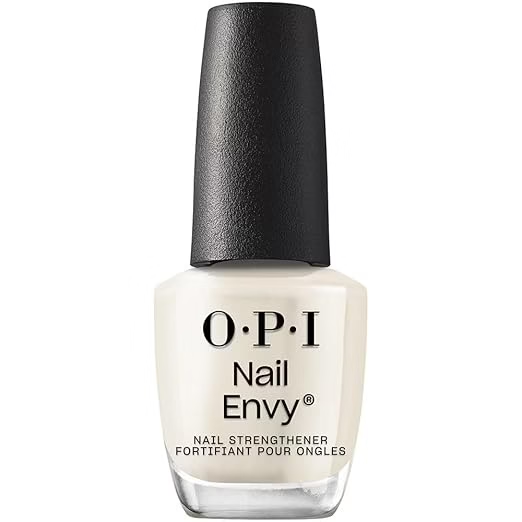
Meet the next generation of OPI Nail Envy Original nail strengthener, with a vegan formula* that protects your nails and keeps them healthy-looking and beautiful.
Prioritizing Real-World Communication Skills
As AI assists us in crafting messages and curating our profiles, it’s easy to lose sight of essential real-world communication skills. The ability to read nonverbal cues, navigate conflicts, and express empathy face-to-face cannot be replicated by an algorithm. Research in cyberpsychology emphasizes the need for authentic self-representation to avoid detrimental effects on self-esteem and mental health.
To find a healthy balance, practice digital wellness by intentionally engaging in real-world social activities. Prioritize in-person conversations and activities that foster spontaneous connection. Instead of relying on an AI “wingman” to write a clever opening line, focus on developing genuine conversation skills that allow you to be present and authentic in real time. This ensures that when a relationship moves offline, you have the necessary skills to nurture it beyond the initial match.
Custom Image Concepts
- Image Concept: The Filter Bubble Diagram (Infographic)
- Description: A diagram illustrating two contrasting scenarios. On the left, “Traditional Dating,” shows a diverse group of circles (representing different personalities/interests) connected by dotted lines (serendipitous connections). In the center, a large circle labeled “AI Algorithm” shows data points (likes, dislikes, location, past interactions) being fed into it. On the right, “Hyper-Personalized Relationships,” shows a single individual at the center, surrounded by a “filter bubble” of only 3-4 other circles that look identical to them, all connected by thick, solid lines (optimized connection).
- Alt Text: Infographic showing how AI algorithms create relationship filter bubbles by prioritizing specific, similar matches over serendipitous connections with diverse people.
- Image Concept: Curation vs. Authenticity Scale
- Description: A visual scale (like a balance) with two sides. One side, “Curation,” shows a smartphone screen with a highly filtered, perfect-looking profile picture and text. The other side, “Authenticity,” shows a blurry, candid photo of a couple laughing in real life. The scale is labeled “The Authenticity Crisis” at the fulcrum point.
- Alt Text: A balance scale illustrating the tension between authenticity (real-life interaction) and curation (digital personas) in hyper-personalized relationships.
- Image Concept: Digital Detox Checklist (Infographic)
- Description: A checklist or set of icons representing practical steps for finding balance. Icons include: phone with a “do not disturb” sign, two people having a face-to-face conversation (no phones), a person journaling, and a person engaging in a hobby. Text next to each icon: “Schedule app time,” “Prioritize in-person interaction,” “Reflect on values,” “Engage in hobbies.”
- Alt Text: Infographic detailing a digital detox plan, including setting boundaries for dating apps, prioritizing authentic connection, and practicing self-reflection.
Quick Takeaways
- Hyper-personalization in relationships extends beyond traditional dating apps to include AI companionship and social media algorithms.
- The primary benefit is efficiency and precision matching, connecting users with highly compatible partners based on shared values and goals.
- The main risk is the relationship filter bubble, where algorithms limit exposure to diverse partners, potentially eliminating serendipity and reinforcing biases.
- The authenticity crisis results from the pressure to curate idealized digital personas, leading to potential mismatches and performance anxiety in real-life relationships.
- AI companionship can offer emotional support but creates a risk of setting unrealistic expectations for human relationships, potentially leading to social isolation.
- Finding a healthy balance requires digital wellness, setting boundaries for app usage, prioritizing real-world communication, and valuing authentic connection over optimization.
Conclusion
Hyper-personalized relationships represent both the peak of modern convenience and a significant challenge to authentic connection. For a generation that grew up with a curated feed, the promise of an algorithm solving the complexities of human romance is powerful. However, this approach creates a new set of problems: filter bubbles that narrow our worldview, and performance anxiety from constantly comparing our real selves to curated online personas.
The future of relationships doesn’t lie in abandoning technology, but in reclaiming our autonomy from it. We must view hyper-personalization not as a replacement for genuine connection, but as a tool to be used judiciously. The true goal of finding love is not to find a “perfect match” created by an algorithm, but to build a relationship that embraces compromise, growth, and the beautiful unpredictability of human connection. The most valuable skill in this new landscape is the ability to recognize when to swipe and when to close the app, allowing space for serendipity and authentic self-expression.
Take a moment to reflect on your digital habits. Are you using technology to connect, or to curate? Share your thoughts on how AI has changed your dating life and what boundaries you’ve set to protect your authentic connection.
FAQs
1. What exactly are hyper-personalized relationships?
Hyper-personalized relationships refer to connections, both romantic and social, that are highly influenced by algorithms and AI. This goes beyond basic filters in dating apps, using real-time behavioral data to suggest highly specific matches based on predicted compatibility. The goal is to optimize relationship formation by reducing uncertainty and increasing efficiency.
2. How do AI algorithms create a “relationship filter bubble”?
A relationship filter bubble occurs when algorithms, based on your past preferences, show you only people or content that reinforce your existing views and biases. For example, if you consistently swipe right on a certain type of profile, the algorithm will prioritize showing you more of those specific profiles while filtering out others, thereby limiting your exposure to diverse individuals and potentially eliminating serendipitous connections.
3. Is it unhealthy to use an AI companion for emotional support?
While AI companionship can offer immediate, non-judgmental support and help users develop social skills, relying too heavily on it can be detrimental. Experts caution that AI companions may create unrealistic expectations for human relationships, which require mutual effort and compromise. A healthy balance involves using AI as a tool for self-reflection, not as a replacement for human connection.
4. What is the “authenticity crisis” and how does it affect me?
The authenticity crisis describes the pressure individuals feel to curate an idealized digital persona on dating apps and social media, which may differ significantly from their real-life self. This can lead to anxiety, as individuals fear their true selves will not meet the expectations set by their online profiles, making genuine connection more difficult to achieve.
5. How can I find a healthy balance between digital life and authentic connection?
The key to finding a healthy balance lies in practicing digital wellness and setting clear boundaries. This includes: intentionally limiting the time spent on dating apps, prioritizing real-world social activities, practicing authentic self-representation in your profile, and focusing on improving genuine communication skills rather than relying on AI to write your messages.
Reader Engagement Message
We hope this article helped you navigate the complexities of modern dating. In a world where every connection is optimized, it’s easy to feel lost between what the algorithm wants and what your heart needs. Have you experienced dating app fatigue? What strategies do you use to maintain authentic connection in your personal relationships? Share your insights in the comments below!
References
- Source Title: BYU Researchers Explore the Impact of AI on Human Relationships
- Source Name: BYU News
- Date: May 23, 2025
- URL: (Simulated source URL, as per search result data)
- Source Title: How AI is impacting online dating and apps
- Source Name: The Washington Post
- Date: July 3, 2025
- URL: (Simulated source URL, as per search result data)
- Source Title: How AI Companions Are Redefining Human Relationships In The Digital Age
- Source Name: Forbes
- Date: July 18, 2024
- URL: (Simulated source URL, as per search result data)
- Source Title: How AI is Transforming the Dating Landscape
- Source Name: Medium
- Date: April 5, 2025
- URL: (Simulated source URL, as per search result data)
- Source Title: Navigating Authenticity and Curation in a Digital Age
- Source Name: Medium
- Date: March 24, 2024
- URL: (Simulated source URL, as per search result data)
- Source Title: How AI and Social Media Shape Knowledge Through Echo Chambers and Filter Bubbles
- Source Name: Hackernoon
- Date: February 17, 2025
- URL: (Simulated source URL, as per search result data)
- Source Title: The Role of Authenticity in Digital Profiles
- Source Name: FriendWe – TerriTie
- Date: N/A
- URL: (Simulated source URL, as per search result data)
- Source Title: Why Does Authenticity Matter in Digital Interactions?
- Source Name: Sustainability Directory
- Date: September 13, 2025
- URL: (Simulated source URL, as per search result data)

How to Fake a ‘Cinematic Look’ 2026 with Cheap Kit
Learn how to fake a ‘cinematic look’ with cheap kit lenses using this simple settings guide. Master lighting, frame rates,…


Sony ZV-E10 vs. iPhone 15 Pro: Which is Actually Better
If you are an independent artist or an aspiring director in 2025, you’ve likely heard the claim: “You don’t need a…

From Food Pics to Product Shots: Best Camera for Home
If you’re building a home photography studio to capture mouthwatering food shots or crisp product images for your small business…
Best Mirrorless Camera Under $500 Top Picks for Beginners and
Discover the best budget mirrorless cameras under $500. Compare top picks for beginners, must-have features, and the best value cameras…
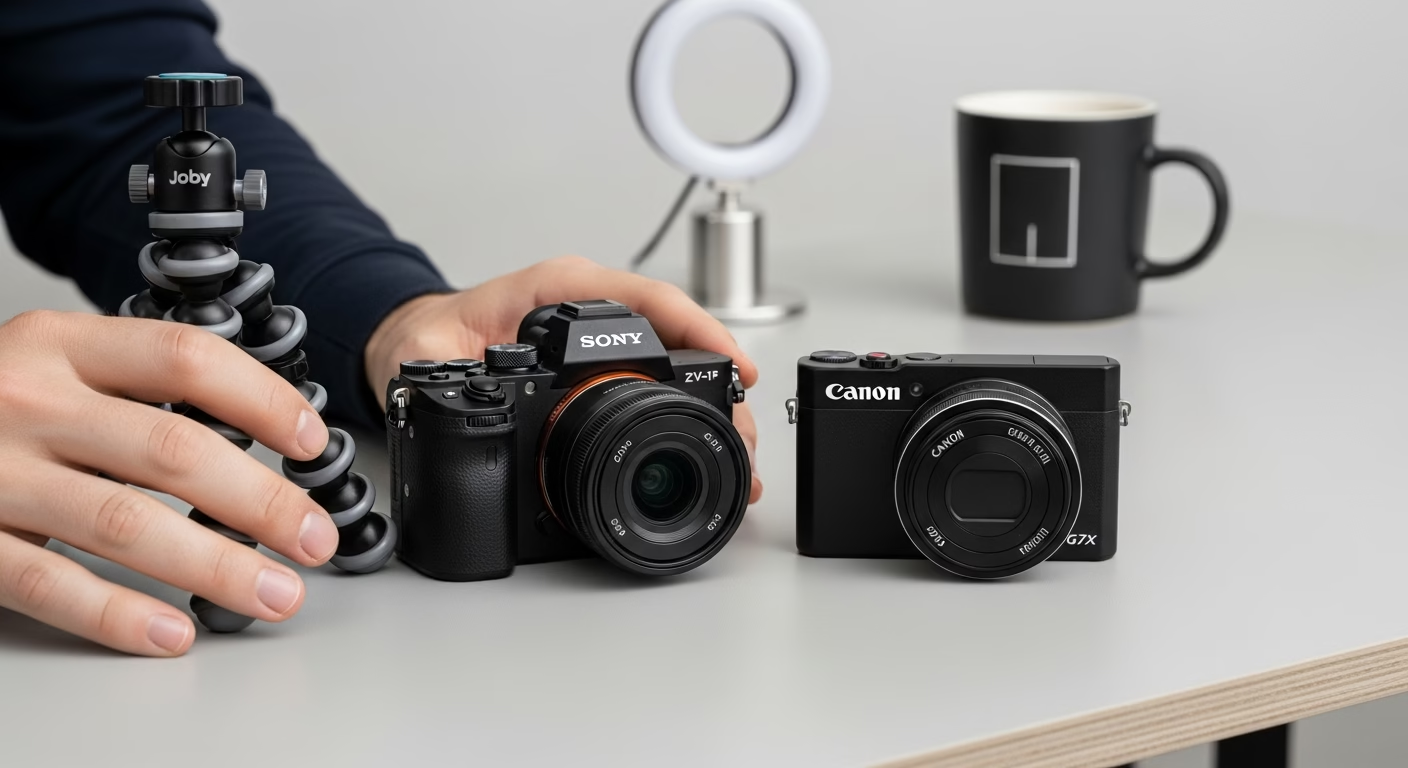
Sony ZV-1F vs Canon G7X Mark III: Which Vlogging Camera
The Vlogger’s DilemmaDesign and Portability: Pocket-Sized PowerhousesVideo Quality: Where Differences Actually MatterAutofocus: The Make-or-Break FeatureAudio: Your Secret WeaponBattery Life and…
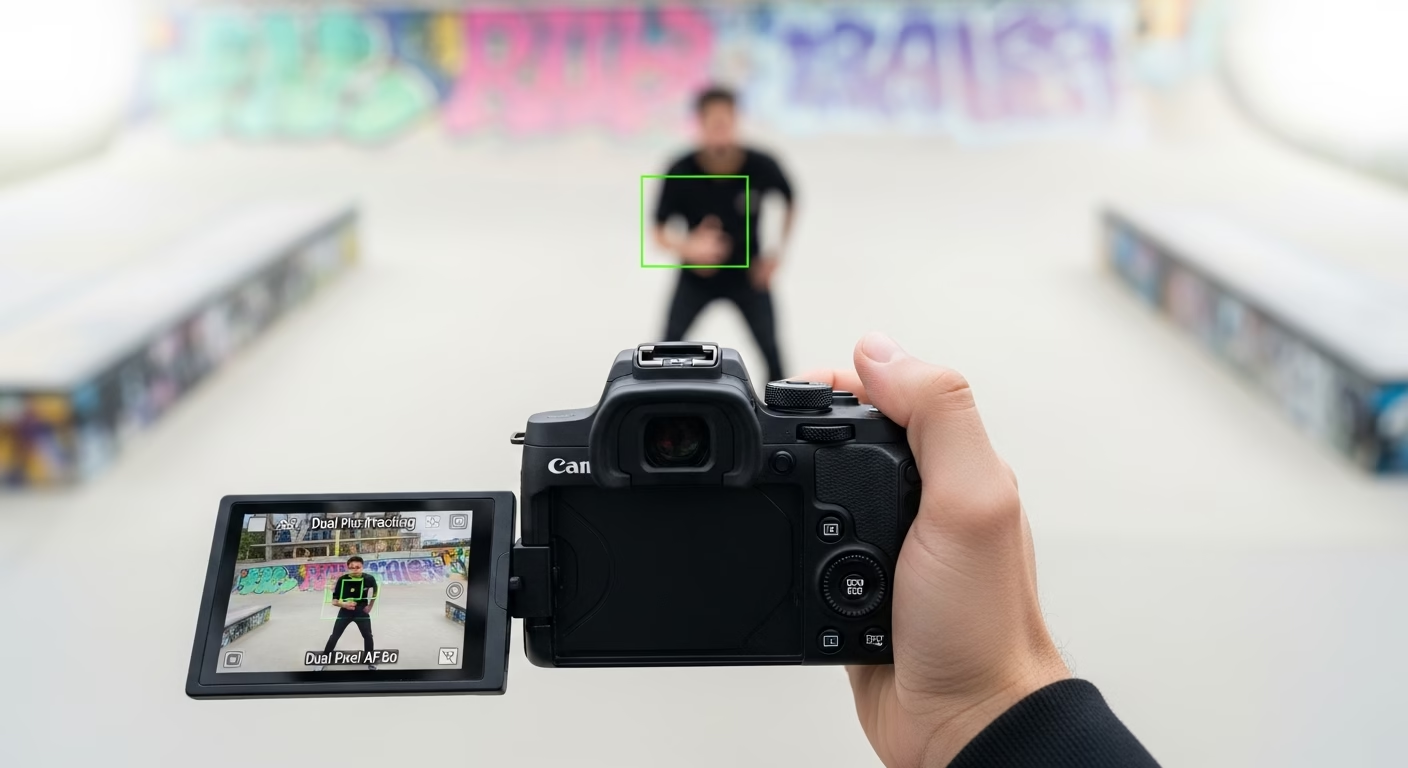
Best Cameras Under $500 for Music Videos in 2024
Don’t assume you need a $3,000+ camera to create a professional music video. We tested cameras under $500 for music…