Table of Contents
Introduction
Buying a dedicated camera can be intimidating, especially when faced with high price tags for the latest models. Many aspiring photographers crave the image quality and creative flexibility of an interchangeable lens camera but are often discouraged by the cost. For beginners, the search often boils down to finding the perfect balance between price and performance. The good news is that you don’t need to spend thousands to capture stunning photos and videos. This guide is dedicated to helping you find the best mirrorless camera under $500, navigating a tricky budget landscape and identifying top-value options. We’ll cover key features to prioritize, why used cameras are a fantastic option, and specific models that shine in this price range.
Comparison Table: Best Mirrorless Cameras Under $500
| Feature | Sony Alpha a6000 (Used) | Panasonic Lumix G7 (Used) | Olympus OM-D E-M10 Mark II (Used) |
|---|---|---|---|
| Sensor Size | 24.2MP APS-C | 16MP Micro Four Thirds | 16MP Micro Four Thirds |
| Video Recording | 1080p Full HD | 4K UHD | 1080p Full HD |
| Autofocus System | 179-point Hybrid AF | 49-Area Contrast Detect AF | 81-Point Contrast Detect AF |
| Image Stabilization | Lens-Based | N/A (Lens-based) | 5-Axis In-Body Image Stabilization (IBIS) |
| Viewfinder | Electronic Viewfinder (EVF) | Electronic Viewfinder (EVF) | Electronic Viewfinder (EVF) |
| Screen | Tilting LCD | Fully Articulating LCD | Tilting LCD |
| Vlogging Focus | Good all-around | Excellent (4K video, flip screen) | Good (IBIS, compact) |
| Low Light Performance | Excellent | Good | Good |
| Lens Ecosystem | Sony E-mount (wide variety) | Micro Four Thirds (extensive) | Micro Four Thirds (extensive) |
| Key Strengths | Fast AF, Excellent Image Quality | 4K Video, Flip Screen, Good Value | IBIS, Stylish Design, Compact |
| Potential Weaknesses | Older Model, Limited 4K | Smaller Sensor, Contrast-based AF | Smaller Sensor |
| Typical Used Price | Under $500 (with kit lens) | Under $500 (with kit lens) | Under $500 (with kit lens) |
The Budget Reality Check: New vs. Used Options
When shopping for a mirrorless camera in the sub-$500 category, the most crucial lesson is that brand new options are limited. The price of entry for a brand-new mirrorless system (including a basic kit lens) has steadily climbed, often starting closer to $600 or higher. A simple search for the “best mirrorless camera under $500” often yields a long list of cameras that have been on the market for a few years but are still incredibly capable for a beginner. You might find older models like the Sony a6000, Olympus PEN series, or Panasonic Lumix G series dominating the results.
For budget-conscious shoppers, the most practical and rewarding solution is to focus on used mirrorless cameras under $500. Purchasing a used or refurbished camera from a reputable retailer (like MPB or KEH – offers a significant advantage: it grants you access to older flagship models that retain excellent features and image quality, often for significantly less than a new entry-level camera. For instance, a used Sony a6000 or Olympus E-M10 Mark II can frequently be found well below this budget and will deliver superior performance compared to a current-generation entry-level camera at the same price.
Why Buy Used?
- More for your money: Get higher-end features (better sensors, faster autofocus) for your budget.
- Depreciation has already occurred: Cameras, like cars, lose value quickly. Buying used means you avoid the initial depreciation hit.
- Sustainable choice: Reduces electronic waste and gives a perfectly good camera a second life.
When considering a used camera, pay close attention to the condition rating and ensure the retailer has a clear return policy for peace of mind.
The Key Features to Prioritize (And Why Mirrorless Wins for Beginners)
For many beginners, a critical decision point is whether to go with a DSLR or a mirrorless camera. The debate between mirrorless camera vs dslr for beginners often highlights a few crucial differences. While DSLRs are a well-established option and can offer good value in the used market, mirrorless cameras provide a more modern and often more user-friendly experience.
Mirrorless cameras are generally more compact and lighter than DSLRs, making them much easier to carry around. The smaller size makes them less intimidating for new users. One of the biggest advantages of mirrorless cameras is their electronic viewfinder (EVF). An EVF provides a real-time preview of your exposure and settings, allowing you to see exactly how the image will look before you take the shot. This visual feedback is incredibly valuable for beginners and can accelerate the learning process. By contrast, DSLRs have optical viewfinders, which show a direct view through the lens but don’t preview the settings.
Let’s break down the key features to prioritize for a sub-$500 mirrorless camera:
- Autofocus Speed and Accuracy: Fast and reliable autofocus is crucial for capturing sharp images, especially if you plan to shoot moving subjects (kids, pets, sports). Look for models with hybrid autofocus systems, which combine phase-detection and contrast-detection AF for speed and accuracy.
- Sensor Size: Sensor size greatly influences image quality, particularly in low light. In this price range, you’ll primarily find APS-C sensors (Sony and some Canon models) or Micro Four Thirds (MFT) sensors (Olympus and Panasonic models). APS-C sensors are larger and generally offer better low-light performance and shallower depth of field (blurrier backgrounds). Micro Four Thirds sensors are smaller but allow for more compact camera and lens systems.
- Image Stabilization (IBIS): In-Body Image Stabilization (IBIS) is a fantastic feature that helps reduce camera shake, leading to sharper images and smoother video, especially in low-light situations or when using longer lenses. Some cameras have IBIS, while others rely on lens-based stabilization.
- Lens Ecosystem: The available lenses for a camera system are just as important as the camera body itself. A vast and affordable lens ecosystem gives you more creative options and future-proofs your investment. Before committing to a system, research the lenses available and their prices. (For more on lenses, see our guide to the Best Entry-Level Mirrorless Camera Lenses Under $200)
Top Recommendations: The Best Mirrorless Cameras Under $500
While prices can fluctuate, several models consistently top the list for the best mirrorless camera under $500, based on their features and overall value. Let’s look at a few standouts:
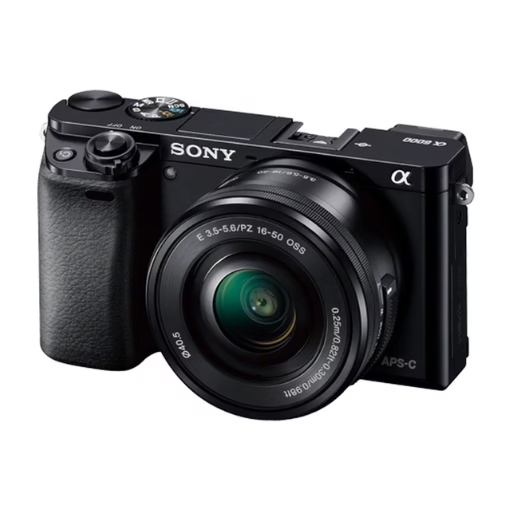
The 24-megapixel APS-C CMOS sensor delivers high-resolution images, even in challenging lighting conditions thanks to its ISO range of 100-25600 (expandable to 51200)
- Sony Alpha a6000: The Sony a6000 remains a benchmark in this category. Despite being an older model, its 24MP APS-C sensor delivers excellent image quality, and its lightning-fast autofocus system is still impressive. It’s a fantastic all-around camera for beginners. You can often find it in used condition with a kit lens for under $500. (Check out a detailed review of the Sony a6000 here [Internal Link Suggestion 2].)
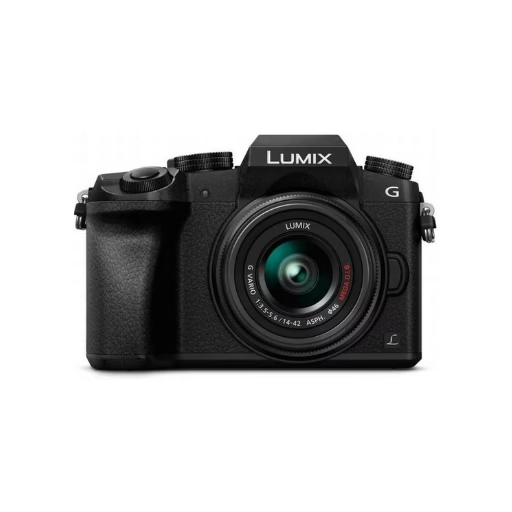
Boasting a 16MP Micro Four Thirds sensor for sharp images and 4K video, this camera features unique 4K photo modes and intuitive controls with customizable dials for easy on-the-fly adjustments.
- Panasonic Lumix G7: The Panasonic Lumix G7 is a particularly strong contender for video shooters and vloggers. It offers 4K video recording, a fully articulating screen (a must for self-recording), and excellent image quality. The G7 often dips below $500 in the used market, making it a superb value. It’s also compatible with the Micro Four Thirds lens system, which boasts a wide variety of lenses.
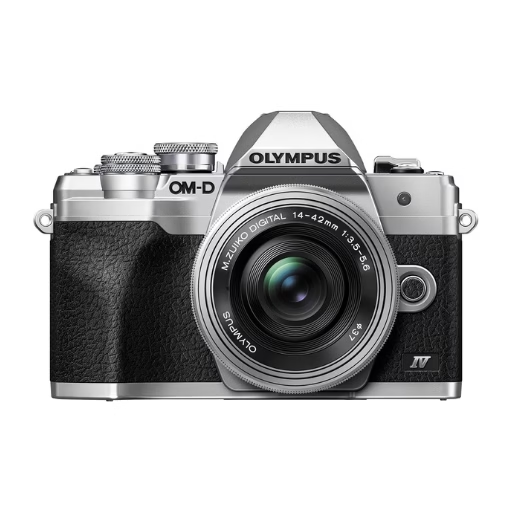
20MP sensor, 5-axis IS for sharp images. Selfie-ready with flip screen. Easy sharing via Bluetooth. 16 Art Filters. 3x optical zoom.
- Olympus OM-D E-M10 Mark II: The Olympus E-M10 Mark II is another excellent Micro Four Thirds option. It features stylish retro design, excellent in-body image stabilization (IBIS), and a user-friendly interface. Like the G7, it’s well-suited for both photos and video.
- Used Fujifilm Cameras: While harder to find consistently under $500, keep an eye out for used Fujifilm X-T10 or X-T20 bodies. Fujifilm cameras are known for their beautiful image quality and film simulation modes, offering a unique shooting experience.
If you’re specifically looking for the best mirrorless camera for vlogging under 500, prioritize models with a flip-out screen and in-body image stabilization (IBIS). The Panasonic G7 and the Olympus E-M10 Mark II are excellent choices in this regard. (See our guide to [Best Vlogging Cameras Under $500 ] for more options.)
System Selection: The Micro Four Thirds Advantage
The best micro four thirds camera under 500 often presents an appealing value proposition for budget-conscious photographers. The Micro Four Thirds (MFT) system, primarily offered by Olympus and Panasonic, provides several distinct advantages in this price bracket:
- Compact Size: MFT cameras and lenses are generally smaller and lighter than their APS-C counterparts, making them highly portable and ideal for travel or everyday carry.
- Extensive Lens Selection: The MFT lens ecosystem is mature and offers a wide variety of high-quality lenses at relatively affordable prices.
- Excellent Image Stabilization: Many MFT cameras feature outstanding in-body image stabilization (IBIS), which is crucial for sharp photos and smooth video, especially in low-light conditions.
However, the MFT system also has some drawbacks:
- Smaller Sensor: The MFT sensor is smaller than an APS-C sensor, which can impact low-light performance and depth of field (bokeh).
- Image Quality Considerations: While MFT image quality is excellent, APS-C sensors generally provide a slight edge in dynamic range and high ISO performance. (For a deeper dive into mirrorless cameras, check out our [Beginner’s Guide to Mirrorless Cameras )
Ultimately, the best system for you depends on your priorities. If you value portability, lens selection, and in-body stabilization, the Micro Four Thirds system is an excellent choice. A good comparison between mirrorless systems can also be found on reputable review sites like DPReview .
Conclusion
Finding the best mirrorless camera under $500 requires smart shopping and a clear understanding of your needs and priorities. By focusing on used or refurbished models and prioritizing key features like autofocus, sensor size, and a solid lens ecosystem, you can find incredible value and capture stunning images and videos. Whether you opt for the reliable performance of a used Sony a6000, the versatile video capabilities of a Panasonic Lumix G7, or the stylish design and in-body stabilization of an Olympus E-M10 Mark II, you’ll be starting your photography journey with a capable tool that represents a significant upgrade over your smartphone.
Ready to start your mirrorless adventure? Check out our guide on How to Buy Used Camera Gear: A Step-by-Step Guide for Beginners for tips and best practices.
Now, we’d love to hear from you! What are your top budget-friendly mirrorless picks, or what questions do you have about choosing the right camera? Share your thoughts in the comments below!