Our Pick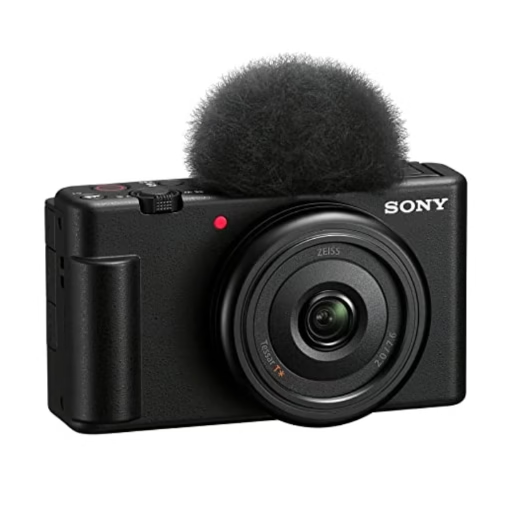 Sony ZV-1F | 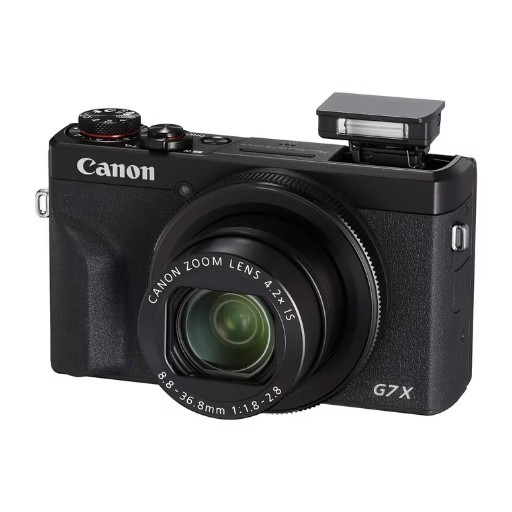 Canon G7X Mark III |  Vlogger Verdict
Best Choice | |
|---|---|---|---|
| Price | Typically lower than the G7X III | Typically higher than the ZV-1F | Sony ZV-1F for budget-conscious creators. |
| Lens (Key for Vlogging) | 20mm equivalent fixed lens | 24-100mm equivalent optical zoom lens | Sony ZV-1F wins for “piece-to-camera” vlogging due to the wider angle. The 20mm captures more background and keeps you well-framed when holding the camera at arm’s length. The Canon G7X III is more versatile for b-roll. |
| Autofocus | Sony’s Real-time Eye AF and Fast Hybrid AF system. | Canon’s Dual Pixel CMOS AF system. | Both offer excellent performance. Sony’s system is highly regarded for its reliability and speed, especially for eye-tracking. |
| Built-in Audio | Directional 3-Capsule Mic with included windscreen. | Standard Stereo Mics. | Sony ZV-1F is significantly better out of the box for speech capture. It focuses on sound from the front and minimizes background noise. |
| Standard Stereo Mics | 3.5mm input jack. | 3.5mm input jack. | Both allow you to connect an external microphone for professional sound quality. |
| Screen Type | Fully Articulating Vari-angle Screen (flips out to the side). | Tilting Screen (flips up and over the camera body). | Sony ZV-1F is superior for vlogging on a tripod or gimbal, as the screen isn’t blocked by the mount. The G7X III screen can be obstructed by tripod plates. |
| Vlogging-Specific Features | Product Showcase Mode: Automatically shifts focus from face to object held up. Background Defocus Switch: One-touch button to blur or sharpen the background. | Live Streaming to YouTube: Direct live streaming capability. Clean HDMI Out: Use as a high-quality webcam for streaming. | Sony ZV-1F offers more creative in-camera tools for reviews and content. The Canon G7X III is better for live streaming/webcam use. |
| Image Stabilization | Active SteadyShot (digital stabilization). | Optical Image Stabilization (OIS) in the lens. | Sony ZV-1F’s digital stabilization is effective but may introduce a slight crop. Canon G7X III’s optical stabilization is highly effective for handheld walking shots. |
| Battery Life | CIPA Rating: Approximately 290 shots (less than G7X III). | CIPA Rating: Approximately 320 shots (more than ZV-1F). | Both cameras will benefit from carrying extra batteries for long shoots. |
Table of Contents
The Vlogger’s Dilemma
You’re ready to level up from phone videos. Your content deserves better quality. Better audio. Better autofocus that doesn’t hunt when you’re mid-sentence. But walk into any camera store or scroll through reviews and you’ll hit the same wall: everyone recommends either the Sony ZV-1F or the Canon G7X Mark III.
Both are compact. Both have flip screens. Both cost roughly the same. So which one actually deserves your money?
Here’s what most reviews won’t tell you: these cameras serve different vlogging styles. One excels at talking-head content and product reviews. The other dominates travel vlogs and versatile shooting. Choose wrong and you’ll fight your camera on every shoot. Choose right and filming becomes effortless.
We’ve spent months using both cameras for daily vlogging, testing them in real-world scenarios that matter: noisy coffee shops, dim restaurants, outdoor adventures, and cramped hotel rooms. This breakdown reveals which camera fits your vlogging style.
Pro Tip: Before choosing between these cameras, film a week of vlogs on your phone and note what frustrates you most. That frustration reveals which features you actually need versus which ones just sound cool.
Design and Portability: Pocket-Sized Powerhouses
Both cameras slip into jacket pockets, but their designs reveal different priorities. The Sony ZV-1F feels purpose-built for vloggers, with a large record button on top and a dedicated background defocus button. Everything about it screams “I’m designed for video first.”
The Canon G7X Mark III comes from photography heritage adapted for video. Its more traditional camera layout includes a control ring around the lens and a mode dial. This makes it slightly more complex but incredibly versatile for creators who shoot both photos and videos.
Weight-wise, they’re nearly identical. The ZV-1F sits at 229 grams while the G7X Mark III weighs 304 grams. That 75-gram difference is noticeable during extended handheld shooting or when mounting on lightweight gimbals. For daily carry, both disappear into your bag without thought.
The Sony’s flip-out screen extends to the side, keeping it visible even with a shotgun mic mounted on top. The Canon flips up, which works great for solo shooting but gets blocked by external mics. If you plan to use professional audio, this difference matters.
Pro Tip: Test your grip before buying. The ZV-1F’s larger grip feels more secure during walking shots, while the G7X Mark III’s slimmer profile fits better in small hands.
Video Quality: Where Differences Actually Matter
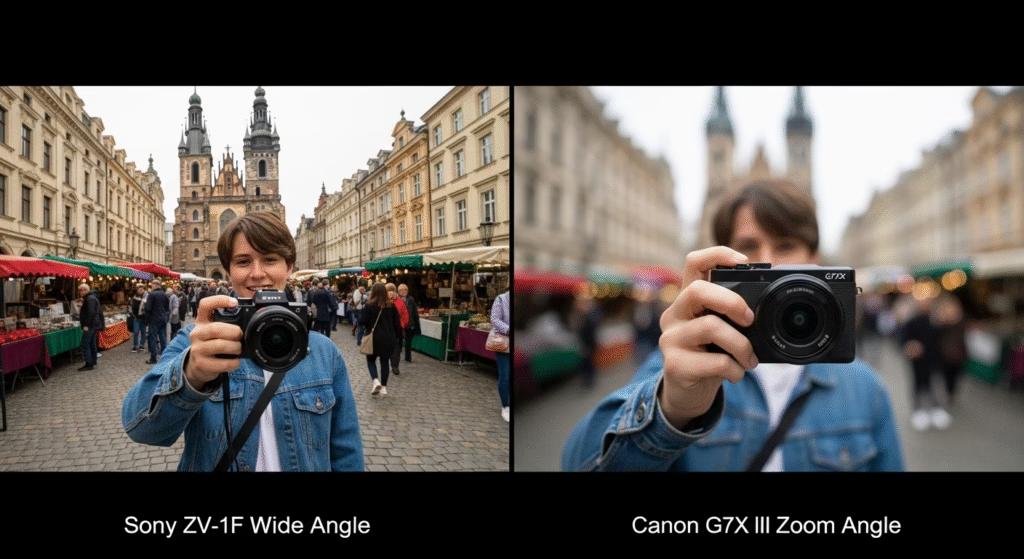
Both shoot 4K, but the implementation differs dramatically. The Sony ZV-1F captures 4K at 30fps with no crop, giving you the full sensor width. This matters for maintaining your framing and getting that wide vlogging angle. However, it lacks 4K 60fps entirely.
The Canon G7X Mark III shoots 4K at 30fps but with a 1.7x crop that tightens your frame considerably. Suddenly that arm’s-length framing feels cramped. But it offers 1080p at 120fps for gorgeous slow-motion b-roll that adds production value to travel vlogs.
In good lighting, both cameras deliver clean, sharp footage that looks professional. Push into challenging situations and differences emerge. The Sony handles mixed lighting better, with more accurate auto white balance that reduces color correction in post. The Canon’s colors pop more naturally, especially skin tones, but it struggles with harsh indoor lighting.
Low-light performance favors the Canon slightly. Its larger 1-inch sensor with faster f/1.8 aperture pulls cleaner footage in dim restaurants and evening scenes. The Sony’s f/2 aperture at 20mm limits low-light capability, though it remains usable up to ISO 1600.
Pro Tip: For talking-head vlogs, the Sony’s wider angle means you can hold it closer and still fit in frame. For b-roll and versatile shooting, the Canon’s zoom lens offers more creative flexibility.
Autofocus: The Make-or-Break Feature
Autofocus separates amateur vlogs from professional content. Nothing screams “budget production” louder than footage going soft mid-sentence. Both cameras excel here, but with different strengths.
The Sony ZV-1F uses advanced real-time eye autofocus that locks onto your face and doesn’t let go. Walk toward the camera, away from it, move side to side—it tracks flawlessly. Product showcase mode instantly shifts focus from your face to whatever you hold up, perfect for review content and unboxings.
Face priority autofocus means the camera always keeps you sharp, even in busy backgrounds. This matters enormously for street vlogs or shooting in crowded spaces where traditional autofocus gets confused.
The Canon G7X Mark III features reliable dual-pixel autofocus that performs excellently in most situations. It tracks faces well and handles subject transitions smoothly. However, in complex scenes with multiple people, it occasionally hunts or picks the wrong subject.
For solo vloggers, both cameras deliver. For content involving multiple people or unpredictable environments, Sony’s AI-powered tracking system proves more reliable and forgiving.
Pro Tip: Enable face detection on whichever camera you choose and leave it on. Modern autofocus systems are smart enough that manual focus becomes unnecessary for 95% of vlogging scenarios.
Audio: Your Secret Weapon
Great vlogs need great audio. Nobody watches videos with terrible sound. Both cameras recognize this, but Sony goes harder on audio features specifically for vloggers.
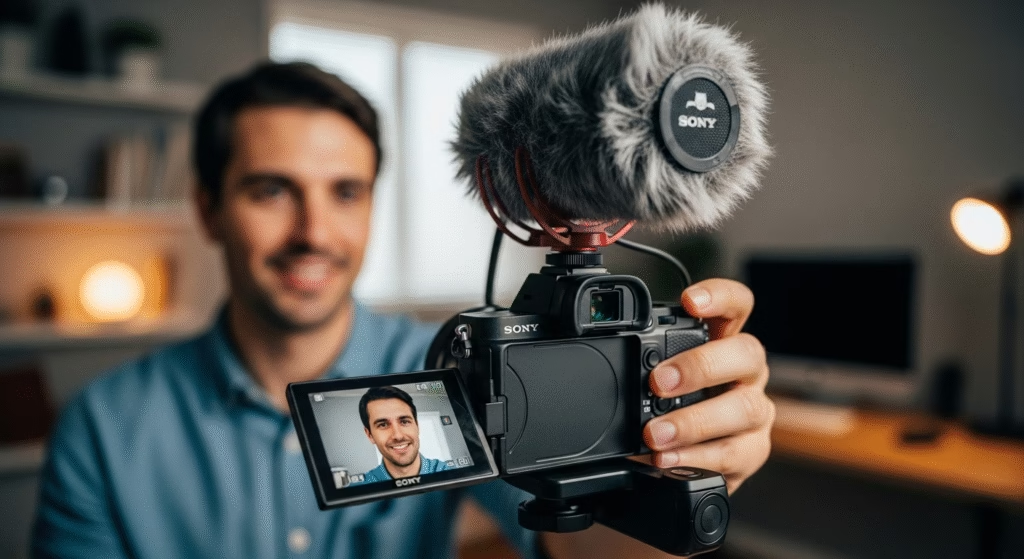
The ZV-1F includes a directional three-capsule microphone that actually sounds decent straight out of camera. It reduces background noise and focuses on your voice. The built-in wind screen helps outdoor shooting, though serious wind still requires a dead cat.
Sony adds a 3.5mm mic input and crucially, a headphone jack. Monitor your audio in real-time. Catch problems before they ruin takes. This professional feature is rare in compact cameras.
The Canon G7X Mark III offers a 3.5mm mic input but no headphone jack. You’re flying blind on audio quality until you review footage. The built-in microphone sounds adequate but not impressive, capturing more background noise than the Sony.
Both benefit enormously from external microphones. A $50 Rode VideoMicro transforms either camera’s audio from acceptable to professional. But Sony’s monitoring capability and better built-in mic give it a clear edge for audio-conscious creators.
Pro Tip: Always record separate audio on your phone as backup. Sync in post using clap slates. This safety net has saved countless vlogs from unusable camera audio.
Battery Life and Recording Limits
Nothing kills vlogging momentum like dead batteries or recording time limits. This is where practical differences emerge during real-world use.
The Sony ZV-1F delivers approximately 60-75 minutes of continuous 4K recording on a single battery. Not spectacular, but sufficient for most vlogging sessions. No recording time limits means you can roll through entire scenes without the camera stopping mid-take.
The Canon G7X Mark III manages similar battery life but imposes a 30-minute recording limit per clip. For long interviews or uninterrupted coverage, you’ll need to restart recording every half hour. This matters less for short-form content but becomes annoying for long-form creators.
Both cameras charge via USB-C, letting you power them from power banks during extended shoots. This feature alone makes all-day vlogging feasible without carrying multiple batteries.
Smart vloggers carry at least two spare batteries regardless of camera choice. Batteries are cheap insurance against missing moments because your camera died.
Pro Tip: Enable airplane mode on the Sony to extend battery life by 20-30%. Unless you need WiFi transfer immediately, this simple toggle adds crucial shooting time.
Price and Value Proposition
Both cameras hover around the $500-750 range depending on sales and bundles. The Sony ZV-1F typically costs slightly less, making it more accessible for beginning vloggers or those on tight budgets.
Value isn’t just about price—it’s about features you’ll actually use. The Sony delivers better value for pure vloggers, talking-head creators, and review channels. Its vlog-specific features justify every dollar.
The Canon offers better value for hybrid creators who want one camera for travel photography, vlogs, and versatile content creation. That zoom lens and superior photo quality expand creative possibilities beyond simple vlogging.
Consider your ecosystem too. Already own Canon lenses or accessories? The G7X Mark III integrates seamlessly. Invested in Sony’s creator ecosystem? The ZV-1F plays nicely with other Sony products.
Pro Tip: Buy used or refurbished from reputable sellers to save 20-30%. Both cameras are built solidly and used models often show minimal wear while delivering identical performance.
The Verdict: Which Camera Wins?
Choose the Sony ZV-1F if you’re a dedicated vlogger who prioritizes talking-head content, reviews, and solo filming. Its purpose-built design, superior autofocus, better audio, and vlogger-friendly features make filming effortless. The wide fixed lens keeps you in frame without thinking.
Choose the Canon G7X Mark III if you want versatility beyond vlogging. That zoom lens enables travel photography, b-roll variety, and creative shot options. Better low-light performance and gorgeous color science make it ideal for hybrid creators who shoot multiple content types.
Here’s the uncomfortable truth: both cameras are excellent. Your choice matters less than learning to use whichever camera you pick. Study composition. Master lighting. Develop engaging on-camera presence. These skills transform any camera into a professional tool.
The best vloggers create compelling content on cheap cameras. The worst vloggers produce boring videos on expensive gear. Invest in your skills before obsessing over specs.
Pro Tip: Rent both cameras for a weekend before buying. Shoot the same content on each. The camera that feels intuitive and disappears during filming is the right choice for you.
Start Creating Today
Stop researching and start vlogging. Both cameras deliver professional results when paired with strong content strategy and solid fundamentals. Browse our detailed vlogging camera guides for side-by-side comparison videos, real creator testimonials, and honest recommendations that help you choose confidently and start building your channel today.
Frequently Asked Questions
Which camera is better for beginners?
The Sony ZV-1F is more beginner-friendly with its simplified vlogging-focused interface and automatic features like product showcase mode. The Canon G7X Mark III offers more manual controls, which can be overwhelming for first-time vloggers but provides room to grow.
Can I use an external microphone with both cameras?
Yes, both cameras have 3.5mm microphone inputs. However, only the Sony ZV-1F includes a headphone jack for audio monitoring. The Canon G7X Mark III lacks this feature, so you can’t monitor audio in real-time.
Which camera is better in low light?
The Canon G7X Mark III performs slightly better in low-light conditions thanks to its faster f/1.8 aperture and larger sensor. It produces cleaner footage in dim restaurants and evening scenes compared to the Sony’s f/2 aperture.
Do these cameras have flip screens?
Yes, both cameras feature flip screens for self-recording. The Sony ZV-1F’s screen flips out to the side, staying visible even with a mounted microphone. The Canon G7X Mark III’s screen flips up, which can be blocked by external mics.
Which camera has better autofocus?
The Sony ZV-1F has superior autofocus with advanced real-time eye tracking and face priority. It’s more reliable in complex scenes with multiple people. The Canon’s dual-pixel autofocus is excellent but occasionally hunts in busy environments.
Can I shoot slow-motion on these cameras?
The Canon G7X Mark III shoots 1080p at 120fps for smooth slow-motion. The Sony ZV-1F maxes out at 1080p 60fps, limiting slow-motion capabilities. For dramatic slow-mo b-roll, the Canon wins.
Is there a recording time limit?
The Sony ZV-1F has no recording time limit, allowing continuous filming. The Canon G7X Mark III has a 30-minute recording limit per clip, requiring you to restart for longer takes or interviews.
Which camera is better for travel vlogging?
The Canon G7X Mark III is better for travel thanks to its zoom lens (24-100mm equivalent), which provides versatility for landscapes, street scenes, and close-ups. The Sony’s fixed 20mm wide lens is great for selfie vlogs but limits creative framing options.
Do these cameras shoot 4K without crop?
The Sony ZV-1F shoots 4K at 30fps with no crop, maintaining the full wide-angle view. The Canon G7X Mark III applies a 1.7x crop in 4K mode, significantly tightening your frame and reducing the wide-angle advantage.
Which camera has better battery life?
Both cameras offer similar battery life of 60-75 minutes of continuous 4K recording. Both charge via USB-C and can be powered by power banks during shoots. Always carry spare batteries regardless of which camera you choose.
Can I take good photos with these cameras?
Yes, both excel at photography. The Canon G7X Mark III has a slight edge for serious photography with its zoom lens and traditional controls. The Sony ZV-1F prioritizes video but still captures quality 20MP photos for social media and basic needs.
Which camera is better for product reviews and unboxing videos?
The Sony ZV-1F is purpose-built for this with its product showcase mode that instantly shifts focus from your face to products you hold up. The background defocus button also helps products pop. These features make review content effortless.
Are these cameras weather-sealed?
Neither camera is weather-sealed. Avoid using them in rain or dusty conditions without protective housing. For outdoor adventures in unpredictable weather, consider adding a rain cover or protective case.
Which camera is better value for money?
The Sony ZV-1F offers better value for dedicated vloggers with its vlog-specific features at a lower price point. The Canon G7X Mark III provides better value for hybrid creators who need photography capabilities alongside vlogging versatility.
Can I livestream with these cameras?
Yes, both cameras can livestream when connected to a computer via USB. The Sony ZV-1F is slightly easier to set up for streaming with better plug-and-play compatibility. Both work well for platforms like YouTube, Twitch, and Facebook Live.