Table of Contents
- Why Music Videos Demand More From Budget Cameras
- What Makes a Great Music Video Camera
- Our Camera Pick for Music Video
- Canon EOS M50 Mark II: The Versatile All-Rounder
- Sony ZV-E10: Built for Content Creators
- Panasonic Lumix G7: The Frame Rate Champion
- GoPro HERO10 Black: For Unique Perspectives
- Best Budget Setup for Music Video Success
- Stop Waiting, Start Creating
Why Music Videos Demand More From Budget Cameras
You’ve got the beat. The artist is ready. The location is perfect. But your camera? It’s the difference between a music video that looks like a passionate project and one that looks professionally shot, even with a camera under $500 for Music Video.
Here’s the challenge: music videos combine every difficult filming scenario into one project. Low-light club scenes. Fast camera movements. Color-grading flexibility. Slow-motion drama. All while your subject moves, performs, and demands your camera keeps up.
Most filmmakers assume you need $3,000+ gear to pull this off. They’re wrong. Today’s sub-$500 cameras pack features that would’ve cost $10,000 a decade ago. But choosing the right one requires knowing which specs actually matter for music video production.
We’ve tested these cameras in real music video shoots—dark venues, outdoor performances, studio sessions—to find which budget options deliver professional results.
Pro Tip: For music videos, prioritize video autofocus and frame rates over megapixels. A camera that shoots smooth 60fps matters more than one with 30MP stills capability.
What Makes a Great Music Video Camera
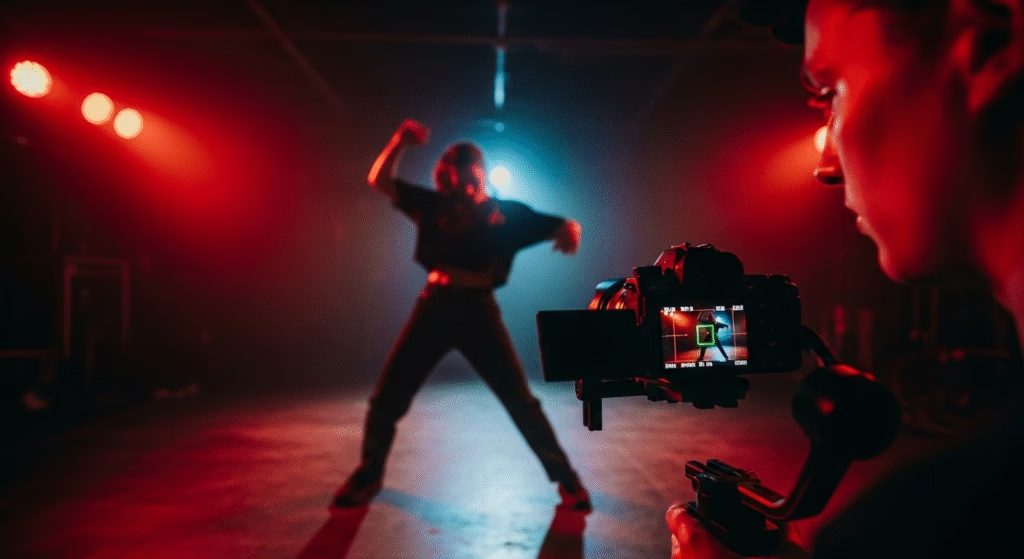
Before diving into specific models, understand what separates good music video cameras from mediocre ones. You need 1080p minimum at 60fps for smooth slow-motion sequences. Reliable continuous autofocus so your artist stays sharp while moving. Decent low-light performance for those moody nightclub scenes. A flip-out screen for creative angles and monitoring your shots.
Audio input matters too. Built-in mics sound terrible. You need a 3.5mm input for external microphones to capture quality sound for syncing in post-production.
Color science makes your editing life easier or miserable. Cameras with flat picture profiles give you flexibility in color grading, turning basic footage into cinematic gold.
Pro Tip: Always shoot in 24fps for that cinematic film look, then capture b-roll at 60fps or 120fps for dramatic slow-motion moments that punctuate chorus drops and beat changes.
Our Camera Pick for Music Video
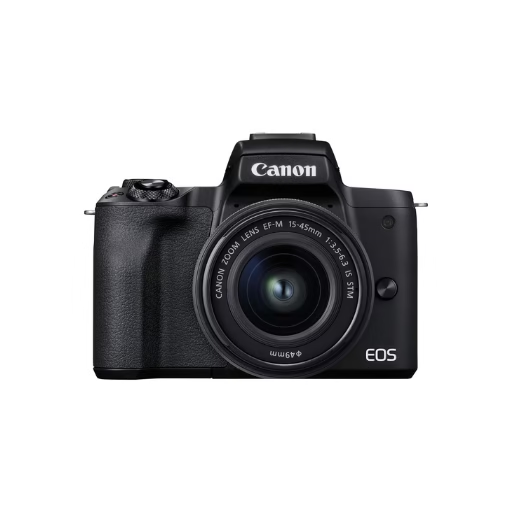
This camera delivers high-quality photos and videos with its 24.1-megapixel APS-C CMOS sensor, offering excellent performance even in low light with an ISO range of 100-25600 (expandable to 51200).
Canon EOS M50 Mark II: The Versatile All-Rounder
The Canon M50 Mark II dominates the budget music video space for good reason. Its dual-pixel autofocus tracks faces flawlessly, keeping your artist sharp even during energetic performances. The 24.1MP sensor delivers clean 1080p at 60fps with surprisingly good low-light performance up to ISO 3200.
The fully articulating touchscreen lets you nail low angles and overhead shots without guessing your framing. Shoot the artist from floor level during dramatic moments or mount it high for crowd shots—you’ll see exactly what you’re capturing.
4K video exists but crops your sensor significantly. Stick with 1080p 60fps for music videos and you’ll get better results anyway. The camera’s compact size makes it perfect for handheld tracking shots and gimbal work without weighing you down during long shoot days.
Canon’s color science needs minimal grading. Even straight-out-of-camera footage looks warm and pleasing, saving hours in post-production.
Pro Tip: Enable Movie Digital IS for smoother handheld footage. Combined with a basic gimbal, this budget camera produces stabilization that rivals professional setups.
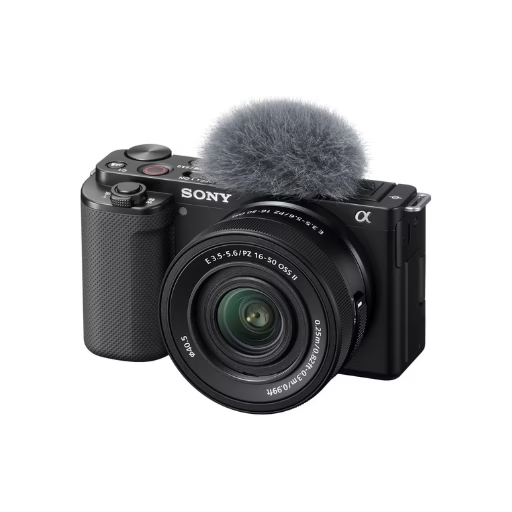
24.2MP APS-C Exmor CMOS Sensor and fast BIONZ X processor
4K Movie oversampled from 6k w/ full pixel readout, no pixel binning
Sony ZV-E10: Built for Content Creators
Sony designed the ZV-E10 specifically for video creators, and it shows. The APS-C sensor pulls gorgeous footage in low light, crucial for those dimly lit performance venues. Real-time autofocus with eye detection keeps your subject sharp even when they’re moving unpredictably.
Product showcase mode becomes your secret weapon. Point at instruments, album covers, or props and the camera instantly shifts focus, creating dynamic b-roll that adds production value. The background defocus button gives you instant bokeh control without menu diving mid-shoot.
Slow-motion shooters love the 120fps capability at 1080p. Capture that hair flip, that guitar string vibration, that confetti explosion in buttery slow-motion that emphasizes emotional moments.
The built-in three-capsule microphone actually sounds decent for scratch audio, though you’ll still want an external mic for final audio. No recording time limits means you can roll through entire song performances without the camera stopping mid-take.
Pro Tip: Invest in the Sony E 35mm f/1.8 lens. This affordable prime creates cinematic depth and performs beautifully in low light—perfect for intimate performance shots.
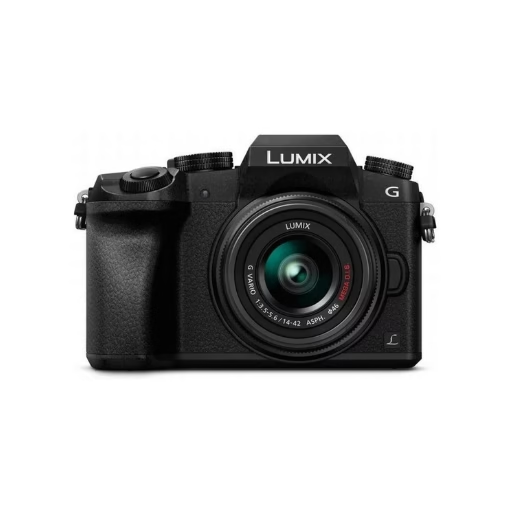
Boasting a 16MP Micro Four Thirds sensor for sharp images and 4K video, this camera features unique 4K photo modes and intuitive controls with customizable dials for easy on-the-fly adjustments.
Panasonic Lumix G7: The Frame Rate Champion
If slow-motion b-roll defines your music video style, the Lumix G7 delivers. True 4K at 30fps gives you room to crop and reframe in post without losing quality. Drop that 4K footage into a 1080p timeline and you’ve got built-in digital zoom for post-production punch-ins.
The micro four-thirds sensor performs surprisingly well in challenging light when paired with fast lenses. While not Sony-level, it handles club lighting and golden hour shooting without falling apart.
Where this camera shines is flexibility. Unlimited recording time. Fully articulating screen. Focus peaking for manual focus pulling. Zebra patterns to prevent blown highlights. These tools matter when you’re creating cinematic sequences that require precision.
The camera’s lightweight body makes it ideal for gimbal work and long handheld takes. Shoot all day without arm fatigue, crucial when you’re capturing multiple location setups in one session.
Pro Tip: Shoot in Panasonic’s CinelikeD picture profile for maximum color grading flexibility. This flat profile preserves highlight and shadow detail that standard profiles clip, giving you cinematic latitude in post.
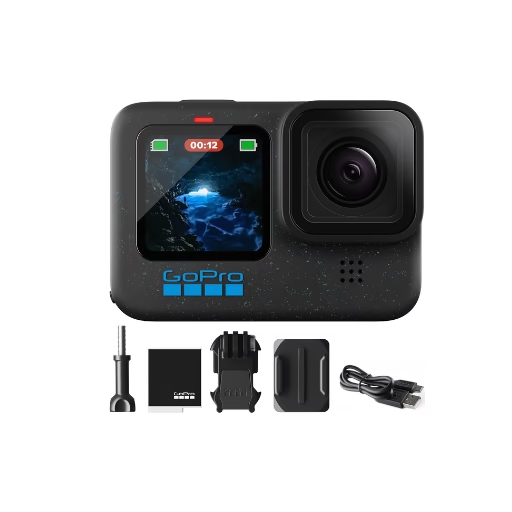
The rugged and waterproof GoPro Hero12 Black captures stunning 5.3K video and 27MP photos, featuring extended runtime with the Enduro battery and Emmy-winning HyperSmooth 6.0 stabilization with 360° Horizon Lock.
GoPro HERO10 Black: For Unique Perspectives
Music videos thrive on creative angles that traditional cameras can’t capture. Mount the HERO10 on a guitar headstock. Strap it to a dancer’s chest. Attach it to a skateboard, drone, or car hood. This tiny camera opens creative possibilities that separate your video from generic performance footage.
The 5.3K video at 60fps delivers sharp, detailed footage. HyperSmooth stabilization produces gimbal-quality smoothness from a camera you can literally throw around. Waterproof design means you can shoot in rain, near pools, or in any weather without worry.
Use it as a secondary camera alongside your main shooter. Cut to POV shots during intense moments. Create dynamic transitions. Add action-cam energy that makes viewers feel the performance rather than just watch it.
TimeWarp mode creates stunning hyperlapse sequences—city lights streaking past, clouds racing overhead, crowd energy compressed into seconds. These establishing shots and transitions add production value that makes your video feel bigger budget.
Pro Tip: Use the HERO10’s horizon leveling feature for perfectly straight footage even when the camera’s rotated. Mount it sideways, upside down, or at odd angles—the footage stays level in post.
Best Budget Setup for Music Video Success
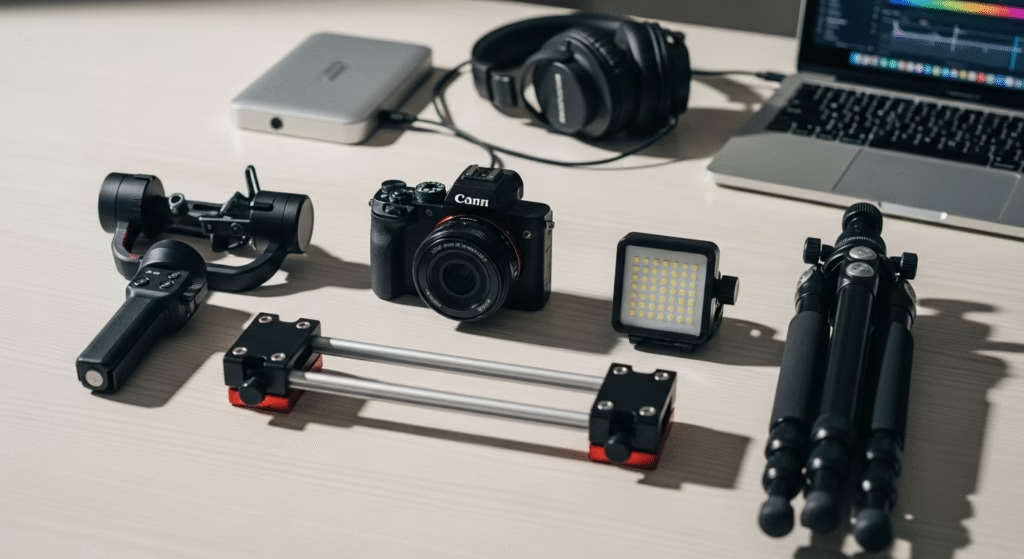
Here’s the truth about gear: one camera rarely covers everything. Professional music video producers use multiple cameras for coverage and creative angles. With a $500 budget, consider splitting your investment.
Primary camera for performance footage and closeups—grab the Canon M50 Mark II or Sony ZV-E10. Add a used GoPro HERO8 or 9 for $200-250 for mounting shots and POV sequences. Now you’ve got two-camera coverage that creates professional editing options.
Invest remaining budget in a basic fluid head tripod, a simple slider, or a budget gimbal. Movement adds production value. Static tripod shots feel boring. A $50 slider creates cinematic push-ins that make your footage feel more expensive.
Don’t forget lighting. A $30 LED panel transforms indoor and nighttime shoots, filling shadows and adding professional polish that separates amateur from pro work.
Pro Tip: Shoot everything twice—once on tripod for stable master shots, once handheld for energy. In editing, you’ll have options to match footage style to song energy.
Stop Waiting, Start Creating
The best camera for music videos is the one you actually use. Stop researching and start shooting. These budget cameras deliver professional results when paired with strong creative vision and solid fundamentals.
Learn lighting, Study camera movement. Understand pacing and editing rhythm. These skills transform any camera into a professional tool. Browse our detailed camera comparison guides for side-by-side specs, real music video sample footage, and honest recommendations that help you choose confidently and start creating today.